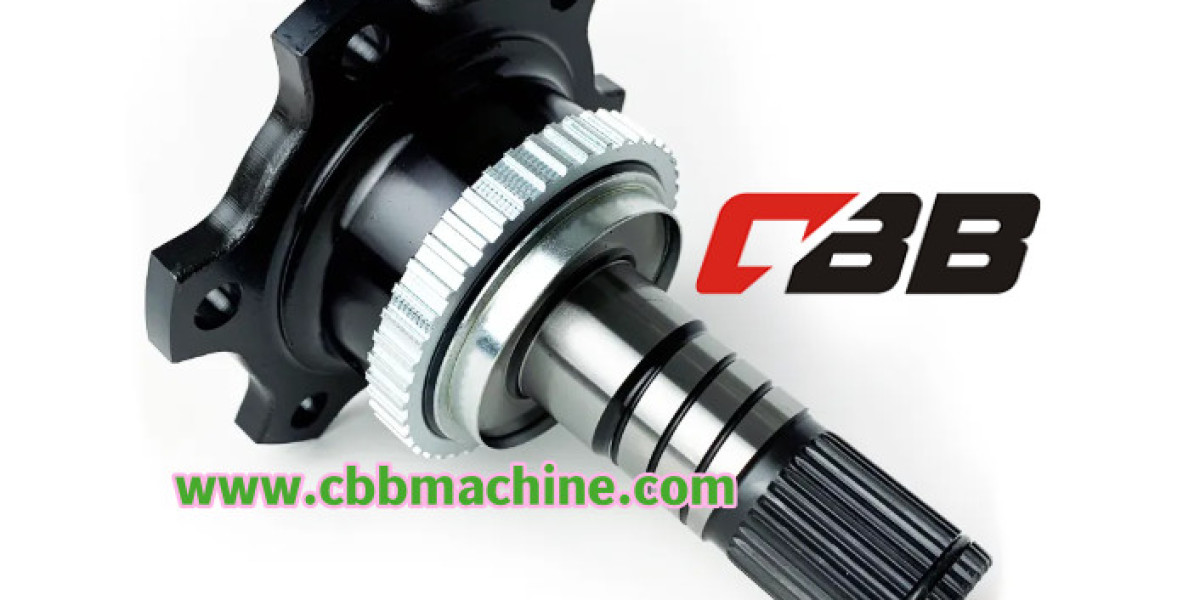

In the evolving landscape of industrial machinery, the Differential Shaft has gained attention for its role in flexible winding and tension control, while Cbbmachine continues to provide practical solutions that align with modern production needs. Together, they illustrate how mechanical design can influence efficiency without requiring radical changes to established processes.
The differential design functions by distributing torque evenly across multiple winding stations. This allows each roll to maintain consistent tension, even when variations in diameter or material properties exist. The result is smoother operation, where quality and precision are maintained from the first turn to the last. Such performance becomes vital in industries where material uniformity cannot be compromised.
Adaptability is one of the defining attributes of this shaft. It accommodates a wide range of materials, from delicate films to sturdy substrates, while ensuring controlled winding that avoids stretching or deformation. This versatility makes it an attractive option for manufacturers dealing with diverse production runs, enabling them to adjust output without overhauling their machinery.
Durability also factors heavily into its appeal. By reducing slippage and preventing uneven stress, the shaft extends the life of both the machine and the materials it handles. Over time, this translates into fewer interruptions and a more stable workflow. For teams tasked with balancing productivity and quality, such reliability offers a clear advantage.
From an operational standpoint, ease of use defines much of its value. Installation requires minimal adjustment, and once integrated, the shaft consistently performs without constant supervision. Operators can focus on broader tasks while relying on the shaft to manage the finer details of torque distribution and tension balance. This simplicity contributes to overall system efficiency.
Another aspect worth noting is its impact on end product consistency. By maintaining steady tension, the shaft minimizes defects that arise from uneven winding. This ensures that final outputs meet expected standards, reducing waste and strengthening customer confidence in the manufacturing process. Precision at this level often becomes the difference between acceptable performance and consistently reliable outcomes.
The broader implication of adopting differential shafts lies in their contribution to operational balance. Instead of chasing rapid adjustments or frequent interventions, manufacturers can achieve a steady rhythm of production. The shaft embodies this balance, merging mechanical stability with adaptability, and demonstrating how thoughtful engineering supports long-term progress.
For those considering enhancements to their production lines, the opportunity lies not in abstract descriptions but in direct engagement with practical solutions. The next step is simple yet significant. Begin it by visiting https://www.cbbmachine.com/news/industry-news/what-is-a-differential-shaft.html , where each visit is more than a glance—it is an invitation to imagine new possibilities for industrial precision.