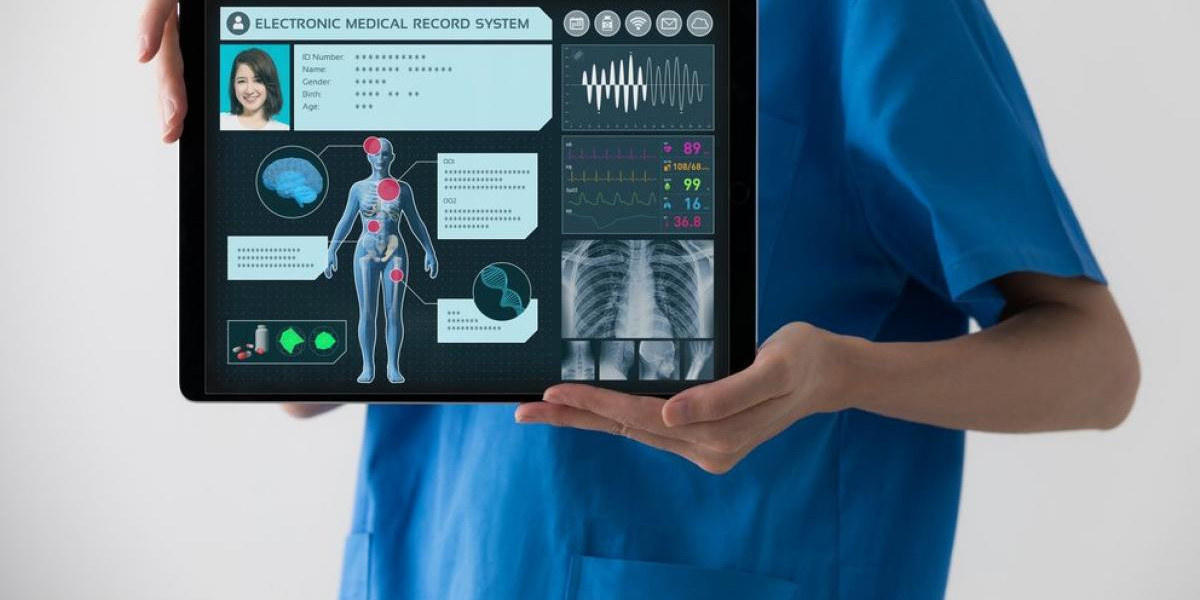

The global healthcare industry is in the midst of a profound digital revolution—one that is transforming how medical data is collected, analyzed, and shared. At the heart of this transformation lies Electronic Health Records (EHRs), a cornerstone technology redefining patient care delivery worldwide. Valued at US$ 35.2 billion in 2024, the global EHR market is projected to grow at a CAGR of 5.4% from 2025 to 2035, reaching US$ 62.7 billion by 2035.
As healthcare systems across the world strive to become smarter, safer, and more patient-centric, EHRs are enabling greater efficiency, interoperability, and innovation—ushering in an era of connected healthcare where data drives better decisions, outcomes, and trust.
Understanding Electronic Health Records: The Digital Foundation of Modern Medicine
An Electronic Health Record (EHR) is a digital version of a patient’s complete medical history, maintained by healthcare providers and updated in real time. Unlike traditional paper records, EHRs consolidate all critical health data—diagnoses, medications, lab results, allergies, treatment plans, radiology images, and immunization histories—into a single, easily accessible system.
This digital integration allows healthcare professionals across hospitals, clinics, laboratories, and pharmacies to access, share, and update patient information seamlessly. The result is improved coordination, fewer medical errors, faster diagnosis, and better clinical outcomes.
EHRs are more than digital filing systems; they are intelligent platforms that support data-driven care. They provide tools for clinical decision support, quality measurement, and outcome tracking, allowing healthcare organizations to transition from reactive to proactive care models.
Download Sample PDF Copy: https://www.transparencymarketresearch.com/sample/sample.php?flag=S&rep_id=4153
Driving Forces Behind the Rapid Adoption of EHR Systems
The rise of EHRs is not just a technological evolution—it’s a response to changing healthcare dynamics. The need for efficiency, accuracy, and transparency in medical care has made digital records indispensable. Several key factors are driving this surge:
1. Digital Transformation and Government Initiatives
Global healthcare systems are undergoing rapid digitalization, and governments have played a pivotal role in accelerating EHR adoption. In the U.S., the HITECH Act (Health Information Technology for Economic and Clinical Health) has incentivized hospitals and clinics to adopt certified EHR systems, driving near-universal implementation across healthcare institutions.
Similarly, the European Health Data Space (EHDS) initiative, effective from March 2025, aims to unify health records across EU nations, improving data sharing and patient access. These policies reflect a global shift toward standardized, interoperable, and secure digital health ecosystems.
2. Patient-Centric and Value-Based Care Models
As healthcare moves from volume-based to value-based care, EHRs have become essential tools for enhancing quality, outcomes, and patient satisfaction. They enable healthcare professionals to personalize treatment plans, track patient progress, and share information across care teams.
Moreover, EHR portals empower patients to view their health records, test results, and prescriptions—fostering transparency and active engagement in personal health management. In this way, EHRs not only improve clinical efficiency but also build stronger, trust-based relationships between patients and providers.
3. AI, Cloud Computing, and Predictive Analytics
Emerging technologies are taking EHR systems beyond data storage. The integration of artificial intelligence (AI) and machine learning (ML) is transforming how data is used in healthcare. AI-powered EHRs can detect health risks, predict disease progression, and assist physicians in clinical decision-making through real-time analytics and pattern recognition.
Meanwhile, cloud-based EHR systems are offering flexibility, scalability, and cost efficiency. They eliminate the need for heavy IT infrastructure and enable healthcare professionals to securely access records anytime, anywhere. This accessibility is especially valuable in multi-location health systems and rural telemedicine programs.
4. Telehealth and Remote Monitoring Synergy
The pandemic accelerated the global adoption of telemedicine and remote patient monitoring (RPM) solutions, making EHRs even more vital. These systems integrate seamlessly with wearable devices, IoT-based sensors, and mobile health apps—enabling the continuous flow of patient data from home to healthcare providers.
This real-time data exchange improves chronic disease management, allows early intervention, and enhances care continuity. As telehealth becomes a permanent feature of healthcare delivery, EHRs serve as the backbone of integrated virtual care.
Overcoming Challenges: Security, Interoperability, and Cost
While EHR adoption has surged globally, several challenges remain that could slow down progress.
1. Data Security and Privacy Concerns:
Healthcare data is among the most sensitive information in the world, making it a prime target for cyberattacks. Breaches can compromise not only patient confidentiality but also institutional trust. Ensuring robust cybersecurity frameworks, encrypted communication, and compliance with standards like HIPAA and GDPR are crucial to safeguard patient data.
2. Interoperability Issues:
Despite technological advances, achieving seamless interoperability among diverse EHR systems remains a major hurdle. Data silos prevent smooth communication between hospitals, insurers, and other care providers. To address this, healthcare organizations are adopting FHIR (Fast Healthcare Interoperability Resources) standards and APIs that promote standardized data exchange.
3. High Implementation Costs:
The cost of setting up, maintaining, and training staff for EHR systems can be substantial—particularly for small clinics and facilities in developing regions. However, the long-term benefits in operational efficiency, reduced errors, and improved care outcomes outweigh the initial investment. Cloud-based EHR solutions are also helping reduce financial barriers by offering subscription-based models with minimal upfront costs.
Regional Insights: North America Leads, Asia-Pacific Rising Fast
North America remains the global leader in EHR adoption, driven by advanced healthcare infrastructure, strong government mandates, and widespread provider compliance. In the U.S., nearly every non-federal acute care hospital and most physicians use certified EHR systems. Canada is also advancing digital health access through nationwide interoperability initiatives.
Meanwhile, Asia-Pacific is emerging as the fastest-growing region in the EHR landscape. Nations like India, China, and Japan are making major investments in healthcare IT and national digital health missions. The rise in chronic diseases, expanding healthcare coverage, and growing government emphasis on telehealth are fueling rapid EHR deployment across the region.
Europe also continues to demonstrate steady progress, supported by strong regulatory frameworks and cross-border digital health initiatives.
The Future of EHR: Smarter, Connected, and Predictive
The future of electronic health records lies in intelligence, automation, and seamless integration. EHR systems are evolving into intelligent care platforms that utilize AI, natural language processing (NLP), and predictive analytics to enhance clinical insights and reduce administrative burdens.
Interoperability will become the norm rather than the exception, enabling global health data exchange across providers, insurers, and even national borders. Blockchain technology may also emerge as a key enabler, ensuring transparent, tamper-proof medical data sharing.
As 5G connectivity, IoT integration, and cloud scalability continue to advance, EHR systems will empower real-time, data-driven healthcare that is both preventive and personalized.
Conclusion
Electronic Health Records (EHRs) are no longer optional—they are the digital lifeblood of modern healthcare. By enabling smarter, safer, and more connected systems, EHRs are transforming how care is delivered, managed, and experienced.
With the global market expected to surpass US$ 62.7 billion by 2035, EHRs will continue to be the cornerstone of healthcare’s digital transformation—bridging technology and compassion to create a world where every patient benefits from coordinated, efficient, and personalized care.
In essence, EHRs represent the future of healthcare: a future where data empowers decisions, technology strengthens trust, and connectivity saves lives.
Contact:
Transparency Market Research Inc.
CORPORATE HEADQUARTER DOWNTOWN,
1000 N. West Street,
Suite 1200, Wilmington, Delaware 19801 USA
Tel: +1-518-618-1030
USA - Canada Toll Free: 866-552-3453